The Athabasca Oil Sands Project (AOSP) is a joint venture between majority owner Shell Canada, Chevron Canada, and Marathon Oil Canada Corporation. AOSP operates two mines. No processing is done at the mines and the bitumen is transported in a diluted form by pipeline to the Scotford upgrader facility located 50 km northeast of Edmonton, Alberta. The Scotford upgrader currently produces 255,000 barrels per day of synthetic crude. This currently meets 10% of Canada’s requirements.
The proposed Keystone XL pipeline, to transport Alberta oil down to refineries on the Gulf of Mexico ignited a firestorm of controversy, and it was eventually blocked by President Obama. Critics claim it encourages the use of “dirty” oil. (Until recently, Canadian oil supplied 17% of US demand, the tar sands have been actively mined since the mid-60’s.) The critics have several complaints, but a significant fact is that in “upgrading” the bitumen, large quantities of CO2 are generated.
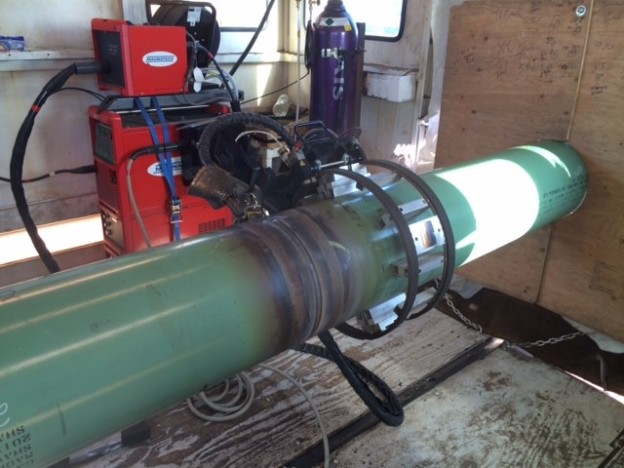
Shell Canada is investing $1.4 billion in the Quest carbon capture and storage demonstration project. It is designed to capture one million tonnes of CO2 annually from the company’s Scotford heavy oil upgrader. The CO2 is converted from a gas to liquid, and transported by a new 60 km pipeline to a storage site. To put this in perspective, one million tonnes of carbon dioxide is equivalent to the annual tailpipe emissions of 175,000 cars. The Government of Canada and the province of Alberta are also providing funding for this initiative.
Gas and oil are typically extracted from deposits trapped by stone formations below the earth’s surface. In a novel twist, captured CO2 will be injected into a sandstone formation, two kilometers down. The CO2 is injected under pressure into the porous sandstone geological formation. Once injected, the CO2 moves through the formation, but is trapped by an impermeable layer of cap rock overlying the sandstone storage. This method of storing (sequestering) carbon dioxide is termed “structural storage”. There is considerable experience with Carbon Capture and Sequestration (CSS) projects worldwide and the evidence is that carbon dioxide can be captured permanently in geological formations. For example, the Norwegian Sleipner project, operating since 1996, has stored CO2 which is injected into oil wells to enhance oil recovery at this offshore oil fields. Impermeable geologic formations have trapped oil and gas for millions of years, which provides confidence that carbon dioxide will be safely stored indefinitely. Three sealing layers of rock exist at the Quest storage site. Shell has decades of experience in modeling subsurface geologic formations during gas exploration, providing the company with unique expertise in storage site selection.
One process used to upgrade the bitumen to lighter synthetic oil involves hydrocracking where steam, methane gas, and a catalyst are combined with the bitumen under high pressure. The chemical reaction produces hydrogen, which is then used to convert the heavy oil into lighter crude by a process called “hydrogen addition”. But carbon dioxide is a byproduct of the process. The Scotford upgrader currently releases three million tonnes annually into the atmosphere.
The Quest facility pipes CO2 gas into a vessel containing Shell’s patented ADIP-X amino-based capture technology, which absorbs the CO2. The solution is then piped to a stripping tower where heat and pressure release the CO2, which is then piped to a compressor station. The compressor turns the gas to a liquid that can be transported by pipeline.